Thursday, March 3, 2022

Perspectives of the Vietnam War – audio recordings from our archive!

 Author: Kate Davis – Casey Cardinia Libraries

The Vietnam War – one of the most contentious military actions in Australian (and world) history. From 1962 to 1973, 60,000 Australian soldiers served in this war. 521 died, and over 3,000 were wounded (1). Hidden among the newly digitised local history resources – available here in our catalogue - there are a range of interviews which were conducted by Berwick Secondary School students (names unknown) in the late 1980’s and early 1990’s. Two of these interviews, perspectives from a Mr. Denis Lansbury and a Mr. P. Finn, tell a story of the local experiences of the Vietnam war. Both were asked about their views of Australia’s involvement – the only difference being that one served, while the other didn’t.

Mr. Lansbury was conscripted as a National Serviceman and sent to Vietnam at 22 years old. His service record reveals that he served as a Private in the Royal Australian Army Corps, fighting in Vietnam from February 1968 to February 1969 (2). Mr. Lansbury served a total of 2 years - we can assume he undertook a year of training in Australia before being deployed.

Ballot balls (marbles) that were used as part of the National Service Scheme.

The National Service, under which Mr. Lansbury was drafted, was a selective conscription scheme introduced by the Menzies government in 1964. The process was similar to a lottery. Marbles numbered 1-31, each representing a day of a month, were randomly drawn from a barrel. All 20-year-old males whose birthday landed on the number drawn were required to present for service (3). Once 2 years of active service was completed, National Servicemen remained in the Reserves for 3 years (4). Mr. Finn’s experience was different; he was not the right age for conscription and did not want to volunteer. If he had been conscripted, Mr. Finn would have conscientiously objected. Conscientiously objecting, for most of Australia’s involvement in the war, meant jail.

Mr. Lansbury was posted at Nui Dat, in the Phuoc Tuy province – Australia’s northernmost base, allocated by the United States. Nui Dat, Vietnamese for ‘small hill’, was the ideal spot for a base designed to break the North Vietnamese’s stronghold on the surrounding villages (5). Nui Dat was, as Mr. Lansbury described, relatively close to the border and maintained through continual patrolling. This severely strained the bases resources (6). At its peak, Nui Dat was home to 5,000 Australian personnel (7). Mr. Lansbury was part of a reinforcement unit which undertook ad hoc tasks. He was involved in protecting civil affairs units, supporting fire support bases, patrolling the surrounding jungle and searching nearby villages.

Map of Phuoc Tuy province - Nui Dat is in the very centre of the image. 

During his time overseas, Mr. Lansbury had considerable contact with the Vietnamese people. Particularly, he said, with the Vietnamese living in the Long Hai mountains.  Mr. Lansbury was not forthcoming when asked if he was involved in battles during his time in Vietnam, and understandably so. It can, however, be expected that he was indeed involved in battles while serving.


Aerial photograph of the Long Hai Mountains, which were a stronghold for the North Vietnamese.


The experience of the war on the home front was drastically different than it had been during previous wars. As Mr. Finn recalled, the media reporting made it difficult to understand what Australians were experiencing overseas. As the war progressed, media coverage was enormous - and much of it was distorted. Most of the coverage in Australia utilised footage of American operations. The Department of Defence and Army strictly controlled footage of Australian troops and several media outlets had refused to post journalists in Vietnam long-term (8), resulting in American footage being aired during Australian news coverage.

Mr. Finn was able to see that the footage being presented was distorted – for many others the distinction was much harder. This undoubtedly contributed to the anti-war movement which was gaining momentum at home. Graphic media coverage brought the realities of war home like never before (9), forcing more Australians to believe that the war could not be won. Protests were held as part of the Vietnam Moratorium Campaign against the war right across Australia. 


Vietnam Moratorium Campaign march in Melbourne.

The largest took place on May 8, 1970 in major cities Australia-wide and became the largest public demonstration in Australian history at the time (10). 200,000 people took part. In Melbourne alone, the crowd was 70,000 strong (11). Mr. Finn reported that he had not attended the protests, but supported the movement and knew quite a few people who were part of the May 8 protest. Mr. Finn believed that this campaign proved that a large percentage of the population disapproved of Australian military involvement in the war. As one might expect, Mr. Lansbury viewed these protests a little differently. He believed that the war was lost because it had become so political, noting that ‘socialists’ like MP Dr. Cairns had severely damaged the cause. Dr. Jim Cairns was the chairman of the Victorian Vietnam Moratorium Campaign and spoke vehemently against the war in parliament and at protests (12). Mr. Lansbury did recall that the Australians fighting in Vietnam were aware of the anti-war campaigns, and were hopeful it might bring them home.


Dr. Jim Cairns speaking to attendees at the Vietnam Moratorium Campaign march in Melbourne.


Perhaps the most valuable perspective offered by Mr. Lansbury is related to the experiences of Vietnam veterans post-war. As many would recall, Vietnam veterans suffered from psychological and physiological issues long after they had returned home. A lot of the men Mr. Lansbury fought with had been diagnosed with cancer and psychological illnesses in the years since. This was not at all uncommon. Research now suggests that 20 to 30 percent of Vietnam veterans suffer from post-traumatic stress disorder (13). When asked whether his own health was impacted by his service, Mr. Lansbury’s answer is sobering; he will never know. He believed he was affected by Agent Orange – a mix of herbicides and fuel, used as a defoliant to deteriorate the jungle along North Vietnamese supply lines, so that aerial attacks were precise (14). Mr. Lansbury recalls that he, and others, would drink and shower from large water tanks at the base, in an area that defoliant spraying planes frequented. None of these water tanks had covers. 

Photograph of Nui Dat. This looks to be an aerial photograph taken from some distance. The base appears to be in the clearing at the centre of the photograph.


One of Mr. Lansbury’s children was born with spina bifida - one of the most common health impacts in children of Vietnam veterans affected by Agent Orange. Mr. Lansbury expressed concern for his child; for their health and financial welfare in the future. He spoke about a recent judgement that had been made prior to the interview, which sided with the manufacturer of the defoliant. It is likely Mr. Lansbury was referring to the 1983 Agent Orange Royal Commission. The Commission had found that the veterans who were exposed did not have worse health outcomes than the rest of the community. In doing so, in the eyes of many Vietnam veterans, the government had sided against them. The error in this ruling would not be acknowledged until 1994 when new medical research found that the defoliants did, in fact, decrease the health of Vietnam veterans and their families (15).
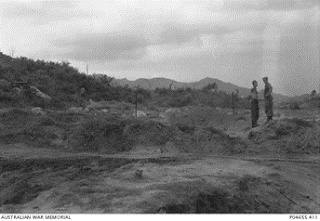
Photograph of defoliated jungle in Vietnam. This shows the devastation the defoliants had on the land.


The outcome of that Royal Commission is incredibly reminiscent of the overall treatment experienced by Vietnam veterans. Mr. Finn explained that up until the Vietnam war, soldiers returning home were hailed as heroes; they were met with jubilation. However, Vietnam veterans were reviled, abused and treated as if they had created great difficulty in other countries of their own accord. Mr. Finn’s perspective, unfortunately, rings true. Veterans returned home to a political environment where the war they had fought was publicly opposed and as a result, they were shunned. Some branches of the Returned and Services League of Australia even refused their membership (16). For Mr. Lansbury though, fighting the war and fighting communism was necessary, even if the Australian approach was not quite right in hindsight.

When these interviews were recorded, some recognition of these issues was being acknowledged. The public had slowly begun to realise the extent of the awful treatment that was afforded to Vietnam veterans. In 1987, a belated Welcome Home march was held – sadly too late for many. The Vietnam Forces National Memorial in Canberra was then built in 1992, dedicated to all who served in Vietnam (17). In the years since, research has revealed how these returning home experiences had exacerbated the psychological effects of the war, and led Vietnam veterans to have much higher levels of psychological illness than veterans of other wars. These interviews give insight into the experience of a local Vietnam veteran and of an individual who experienced the war on the home front. Within the broader context of the Australian experience, these perspectives give an idea as to how the anti-war movement was viewed, and how servicemen viewed their own involvement in the Vietnam war.

References

1 - Australian War Memorial [AWM], ‘Vietnam War 1962-75', AWM [website], 2021, para. 3,  https://www.awm.gov.au/articles/event/vietnam

2 - Department of Veteran’s Affairs [DVA], ‘Nominal Roll of Vietnam Veterans’, DVA [database], 2022, https://nominal-rolls.dva.gov.au/vietnamWar

3 - Education Services Australia Limited & National Archives of Australia [NAA], ‘National service ballot balls – the conscription lottery’, NAA [website], 2010, para. 2; para. 3, https://www.naa.gov.au/learn/learning-resources/learning-resource-themes/war/vietnam-war/national-service-ballot-balls-conscription-lottery

4 - National Museum Australia [NMA], ‘Vietnam moratoriums’, NMA [website], 2021, para. 12,  https://www.nma.gov.au/defining-moments/resources/vietnam-moratoriums

5 - Department of Veteran’s Affairs (DVA), ‘Nui Dat’, DVA Anzac Portal [website], 2020, para. 1; para. 2, https://anzacportal.dva.gov.au/wars-and-missions/vietnam-war-1962-1975/events/phuoc-tuy-province/nui-dat

6 - R. Pelvin, Vietnam: Australia’s Ten-Year War, 1962-1972, Hardie Grant Books, Richmond, Victoria, 2013, p. 59.

7 - DVA, op. cit., para. 4.

8 – R. Pelvin, op. cit., p. 212.

9 - Ibid, p. 207

10 - NMA, op. cit., para. 1.

11 - Ibid, para. 34.

12 - Australian Living Peace Museum [ALPM], ‘Voice of opposition to the Vietnam War’, ALPM [website], n.d., para. 1; para. 2, http://www.livingpeacemuseum.org.au/omeka/exhibits/show/jim-cairns/jim-cairns-voice-opposition

13-  D. Dempsey, When he came home: the impact of war on partners and children of veterans, Arcadia, North Melbourne, Victoria, 2021, p. 15.

14 – Department of Veteran’s Affairs (DVA), ‘Agent Orange’, DVA Anzac Portal [website], 2020, para. 2; para. 3, https://anzacportal.dva.gov.au/wars-and-missions/vietnam-war-1962-1975/events/aftermath/agent-orange

15- R. Pelvin, op. cit., p. 215.

16- D. Dempsey, op. cit., p. 16.

17- R. Pelvin, loc. cit.

Photographs – in order of appearance.

Department of Labour Central Office, National service ballot marbles [photograph], October 15, 1994, National Archives of Australia MP1357/63, https://recordsearch.naa.gov.au/SearchNRetrieve/Interface/DetailsReports/ItemDetail.aspx?Barcode=10429230&isAv=N

Edwards, P., Australia and the Vietnam War, p. 145, New South Publishing, Coogee, New South Wales, 2014.

Gazzard, D. E., The Long Hai mountains in Phuoc Tuy province, a Viet Cong stronghold, seen from an RAAF helicopter gunship [photograph], 1969, Australian War Memorial P01980.012, https://www.awm.gov.au/collection/C284467

Gilchrist, R., Melbourne, Victoria 1970. Leading marches at a Vietnam moratorium demonstration in Collins Street [ photograph], 1970, Australian War Memorial P00671.007, https://ww.awm.gov.au/collection/C40178

Gilchrist, R., Melbourne, Victoria 1970. Dr Jim Cairns MP urges demonstrators at the Vietnam Moratorium march to not clash with police following attempts by militants among them to break up the peaceful assembly [photograph], 1970, https://www.awm.gov.au/collection/C40185

Sedunary, R. L., Nui Dat, Vietnam War, 1970. The American and Australian Bases at Nui Dat (Small Hill) [photograph], 1970, Australian War Memorial P00324.006, https://www.awm.gov.au/collection/C50431

Gibbons, D. S., Operation Finschhafen, 7th Battalion, The Royal Australian Regiment (7RAR), first Operation, [photograph], 15 March 1970, Australian War Memorial P04655.411, https://www.awm.gov.au/collection/C1179077


Wednesday, January 19, 2022

The Lyons of Cranbourne

During the war years, Cranbourne like many other small towns across Australia, rallied behind the soldiers fighting overseas. Communities offered their support at the time in many different ways. In Cranbourne, the Patriotic Association held weekly dances in the Shire Hall to raise money for supplies and parcels to send overseas and funded many welcome-home events and monuments after the war. A branch of the Red Cross was established in Cranbourne towards the beginning of World War One and remained extremely active throughout the First and Second World Wars (1). As a community, Cranbourne lost many fathers, sons, and brothers to the First World War, but maintained a strong fundraising effort throughout.

As with all wars, the First World War devastated many families. One family I came across while researching soldiers from Cranbourne was the Lyons family. Their experience can give an insight into the experience of many families on the home front during war time.

Patrick Lyons married Louisa Henderson (records for Louisa appear under Louise also) in 1892 (2) and the pair went on to have 11 children over the next 24 years; Patrick was approximately 29 when they married; Louise/Louisa was only 17.  Their family consisted of John (1892), Patrick Edward (1894), Leslie William (1895), Charles (1896), Harold (1900), Percy (1902), Mary Eileen Isabel (1904), Gordon (1906), Stanley Noel (1909) Thomas Bertram (1911) and Eric Michael (1916) (birth records in footnotes).

John and Leslie enlisted for World War I in 1915. Patrick and Charles followed shortly and enlisted in 1916. Thus, by the end of 1916, just under half of the Lyons family had gone off to war.


Leslie’s enlistment record (3).


Patrick’s enlistment record (4).


John’s enlistment record (5).

Charles’ enlistment record – he was the youngest out of the boys to enlist, only 18 and 2 months at the time (6).

It can certainly be assumed that having four children leave for war would be devastating for a family, no matter the size. The Lyons family though, had suffered another great loss while their children were enlisting.

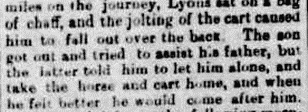
In late 1915, Patrick Lyons, Louisa’s husband and the children’s father died suddenly. He had been involved in an accident on Cranbourne Road, where he had fallen out of the back of a wagon. Patrick was travelling with his son (who we can assume was Harold, because of the age of the child mentioned in the article) and another man. He had insisted the pair go home without him and he would follow, but the following morning he was found dead. It was determined he had died from suffocation during an alcoholic coma, at the age of 52. Patrick was buried at the Cranbourne cemetery, where his gravestone is shared with his son Percy who died in 1927 (7).


The article recalls that Harold tried to assist his father once he had fallen (8).

This event left Louisa Lyons a widow at the age of 40. She was now the single mother to 11 children, 4 of whom were overseas, with 7 children at home under the age of 15. Sadly, within the next three years, two of four of the boys fighting overseas would be killed in service. In September of 1917, Patrick died of wounds sustained (9), and in October of 1918, Leslie was killed in action (10).

  Leslie’s death mentioned in an article in the Dandenong Advertiser and Cranbourne, Berwick and Oakleigh Advertiser (11).

News of Leslie’s death arrived relatively quickly to Australia, with a notice being printed in a paper published on October 31st of 1918. We do not know when news of Patrick’s death reached the family, except for the mention in this article of the death of Leslie’s ‘eldest brother’. The name written is Richard, but I believe it to be a misprint (we know Leslie and Patrick are related, and that this is the same Leslie Lyons, because of the death and birth date mentioned). So, it can be assumed that the Lyons family knew of both boys' deaths late 1918. It is entirely probable that the family went months without hearing news of Patrick’s death, as was quite commonplace.

This left the Lyons’ in a somber position by the end of World War I. They had lost three family members; two to the war, one to an accident. Presumably John and Charles both returned home after the war (below is an excerpt of John’s death notice, printed in 1972 – this lists all members of the Lyons family and was very useful in identifying further family members).


John’s death notice, listing the Lyons family (12).


Digging further into the Lyon’s family history from here, I found that three of the younger boys, Harold, Stanley and Thomas then enlisted in World War II (13). Records also suggests that perhaps the only daughter in the family, Mary, also served in the Second World War. There is a record of a Mary Elizth Isabel Lyons marrying a Harry Evans in 1923 (14). I believe this may have been the same Mary, as in 1923, Mary Lyons would have been 19 years old; a normal age for marriage at the time. If indeed this is the same Mary, she likely served as a nurse. None of these children are listed on the Australian War Memorial’s roll of honour, so it might be assumed that they all survived their service.

Exploring the Lyons family history gives an insight into just how difficult wartime was for most families. The home front continued on as it always had, regardless of the war, and so too did the tragic accidents that had likely been occurring for years. Patrick’s death left Louisa Lyons a widowed, single mother of 11 children, seven (perhaps eight) of whom fought during the World Wars, two of whom lost their lives fighting for Australia. Undoubtedly the experience of the Lyon’s family would be incredibly similar to those of many other families from this period.


Useful Databases When Researching Military Family History:

Australian War Memorial Roll of Honour.

Both Patrick and Leslie are listed on the Australian War memorial Roll of Honour, which commemorates soldiers who lost their lives in service of Australia. The database can be accessed here).

The Roll of Honour can provide family historians with further information about their ancestor's involvement in war, including service and death details. The Australian War Memorial has digitised many circulars (documents which were required to be filled for qualification to the roll of honour, often filled by next of kin), which provide a great deal of extra detail.


Patrick’s circular reveals that he served as a Private in the Australian Infantry Force, 59th battalion, and died of wounds in Polygon Woods, Belgium, at the age of 23 and 8 months. It lists Louisa Lyons at an address in Longwarry East and includes details of Leslie’s service (15).


Leslie’s circular reveals similar information. He served as a Sergeant in the 24th Australian Infantry Battalion and was killed in action at Montbrehain, Picardie, France, at the age of 23 (16).


The Australian War Memorial Roll of Honour webpages also detail which panel of the Commemorative Area the soldier’s name is listed, and times at which their name will be projected onto the exterior of the Hall of Memory.

Find a Grave.
Another great resource for family historians is the Find a Grave database (access here). The database is very useful in finding both military and civilian gravestones.


Leslie’s grave at Calvaire Cemetery in Montbrehain, Picardie, France (17).


Patrick’s grave at Lijssenthoek Military Cemetery in Lijssenthoek, Flanders, Belgium (18).

Author: Kate Davis - Casey Cardinia Libraries

Footnotes

1- City of Casey & Casey Cardinia Libraries, ‘Cranbourne: a town with history’, City of Casey, n.d., p. 7.2, https://www.casey.vic.gov.au/sites/default/files-public/user-files/City%20%26%20Council/About%20Casey/military.pdf

2- The Victorian Registry of Births, Deaths and Marriages, ‘Louisa Henderson in Victoria, Australia, Marriage Index, 1837-1950', Marriage Records, The Victorian Registry of Births, Deaths and Marriages, Melbourne, Victoria, Australia, 2018, Ancestry.com [database], reference number 3182, https://search.ancestrylibrary.com.au/cgi-bin/sse.dll?dbid=61649&h=2075382&indiv=try&o_vc=Record:OtherRecord&rhSource=1778

3- National Archives of Australia, ‘Leslie William Lyons in Australia, World War I Service Records, 1914-1920', B2455, First Australian Imperial Force Personnel Dossiers, 1914-1920, National Archives of Australia, Canberra, Australian Capital Territory, Australia, 2015, Ancestry.com [database], https://search.ancestrylibrary.com.au/cgi-bin/sse.dll?_phsrc=Hnm2&_phstart=successSource&usePUBJs=true&indiv=1&dbid=60864&gsfn=leslie%20william&gsln=lyons&cp=0&msbpn__ftp=cranbourne,%20victoria,%20australia&msbpn=94493&new=1&rank=1&uidh=ry4&redir=false&gss=angs-d&pcat=39&fh=0&h=342463&recoff=&ml_rpos=1&queryId=5b93b738121b6202beab6fa0378bae18

4- National Archives of Australia, ‘Patrick Edward Lyons in Australia, World War I Service Records, 1914-1920', B2455, First Australian Imperial Force Personnel Dossiers, 1914-1920, National Archives of Australia, Canberra, Australian Capital Territory, Australia, 2015, Ancestry.com [database], https://search.ancestrylibrary.com.au/cgi-bin/sse.dll?_phsrc=yBT3&_phstart=successSource&usePUBJs=true&indiv=1&dbid=60864&gsfn=patrick&gsln=lyons&cp=0&msbpn__ftp=cranbourne,%20victoria,%20australia&msbpn=94493&new=1&rank=1&uidh=ry4&redir=false&msT=1&gss=angs-d&pcat=39&fh=0&h=347012&recoff=&ml_rpos=1&queryId=1e6656ed434571b2848144ab7b78380a

5- National Archives of Australia, ‘John Lyons in Australia, World War I Service Records, 1914-1920', B2455, First Australian Imperial Force Personnel Dossiers, 1914-1920, National Archives of Australia, Canberra, Australian Capital Territory, Australia, 2015, Ancestry.com [database], https://search.ancestrylibrary.com.au/cgi-bin/sse.dll?indiv=1&dbid=60864&h=340926&tid=&pid=&queryId=a9ff9d76ffcb54ba3bf4e019a889cdab&usePUB=true&_phsrc=CGP10&_phstart=successSource

6- National Archives of Australia, ‘Charles Lyons in Australia, World War I Service Records, 1914-1920', B2455, First Australian Imperial Force Personnel Dossiers, 1914-1920, National Archives of Australia, Canberra, Australian Capital Territory, Australia, 2015, Ancestry.com [database], https://search.ancestrylibrary.com.au/cgi-bin/sse.dll?indiv=1&dbid=60864&h=343367&tid=&pid=&queryId=8040e977f8dc9c7b8172e54fb4a11947&usePUB=true&_phsrc=yrP3&_phstart=successSource

7- Find a Grave, ‘Patrick Lyons (1863-17 June 1915)’, Find a Grave [database], Memorial ID 66810886, 2011, https://www.findagrave.com/memorial/66810886/patrick-lyons  

8- South Bourke and Mornington Journal, ‘Fatal Accident at Cranbourne’, South Bourke and Mornington Journal (Richmond, Vic.: 1877 - 1920; 1926 - 1927) 24 June 1915, p. 3,  http://nla.gov.au/nla.news-article66187933

9- Australian War Memorial, ‘Roll of Honour Patrick Edward Lyons’, AWM145 Roll of Honour cards, 1914-1918 War, Army [webpage], 2022, https://www.awm.gov.au/collection/R1638375

10- Australian War Memorial, ‘Roll of Honour Leslie William Lyons’, AWM145 Roll of Honour cards, 1914-1918 War, Army [webpage], 2022, https://www.awm.gov.au/collection/R1637576

11- Dandenong Advertiser and Cranbourne, Berwick and Oakleigh Advocate, ‘Cranbourne’, (1918, October 31). Dandenong Advertiser and Cranbourne, Berwick and Oakleigh Advocate (Vic.: 1914 - 1918), 31 October 1918, p. 2, http://nla.gov.au/nla.news-article88816917

12- The Age, ‘John Lyons in Australia, Newspaper Vital Notices, 1831-2001', Fairfax Media, Pyrmont, New South Wales, Australia, 2015, Ancestry.com [database], https://search.ancestrylibrary.com.au/cgi-bin/sse.dll?dbid=9091&h=1800659906&indiv=try&o_vc=Record:OtherRecord&rhSource=60864

13- National Archives of Australia, ‘Harold Lyons in the Australia, World War II Military Service Records, 1939-1945', B884, Citizen Military Forces Personnel Dossiers, 1939-1947, National Archives of Australia, Canberra, Australia, 2016, Ancestry.com [database], https://search.ancestrylibrary.com.au/cgi-bin/sse.dll?dbid=61172&h=1506510&indiv=try&o_vc=Record:OtherRecord&rhSource=1778

National Archives of Australia, ‘Stanley Noel Lyons in the Australia, World War II Military Service Records, 1939-1945', B883, Second Australian Imperial Force Personnel Dossiers, 1939-1947, National Archives of Australia, Canberra, Australia, 2016, Ancestry.com [database], https://search.ancestrylibrary.com.au/cgi-bin/sse.dll?dbid=61172&h=1743295&indiv=try&o_vc=Record:OtherRecord&rhSource=1778

National Archives of Australia, ‘Thomas Bertram Lyons in the Australia, World War II Second Imperial Forces and Citizen Military Forces Service Records, 1939-1947', B883, Second Australian Imperial Force Personnel Dossiers, 1939-1947, National Archives of Australia, Canberra, Australia, 2020, Ancestry.com [database], https://www.ancestrylibrary.com.au/discoveryui-content/view/4253:61987?_phsrc=KTk1&_phstart=successSource&gsfn=thomas+bertram&gsln=lyons&ml_rpos=1&queryId=a98ffe9dc6a783c6df20b6b84a00e5c3

14- The Victorian Registry of Births, Deaths and Marriages, ‘Mary Elizth Isabel Lyons in Victoria, Australia, Marriage Index, 1837-1950', Marriage Records, The Victorian Registry of Births, Deaths and Marriages, Melbourne, Victoria, Australia, 2018, Ancestry.com, reference number 2648, https://search.ancestrylibrary.com.au/cgi-bin/sse.dll?dbid=61649&h=274083&indiv=try&o_vc=Record:OtherRecord&rhSource=61172

15- Australian War Memorial, ‘No. 3149. Private. LYONS. Patrick Edward.’, AWM 131 Roll of Honour Circular [document], n.d.,https://s3-ap-southeast-2.amazonaws.com/awm-media/collection/RCDIG1068879/document/5578343.PDF

16- Australian War Memorial, ‘No. 665. Sergeant. LYONS. Leslie William.’, AWM 131 Roll of Honour Circular [database], n.d., https://s3-ap-southeast-2.amazonaws.com/awm-media/collection/RCDIG1068879/document/5578340.PDF

17- Find a Grave, ‘Sgt Leslie William Lyons’, Find a Grave [website], Memorial ID 56137696, 2010, https://www.findagrave.com/memorial/56137696/leslie-william-lyons

18-

Find a Grave, ‘Private Patrick Edward Lyons’, Find a Grave [website], Memorial ID 12071361, 2005, https://www.findagrave.com/memorial/12071361/patrick-edward-lyons

Lyons Family Birth Records:

Edwardian Index, ‘Gordon Lyons in Australia, Birth Index, 1788-1922', Edwardian Index. Victoria. 1902-1913, 2010, Ancestry.com [database], reference number 9948,https://search.ancestrylibrary.com.au/cgi-bin/sse.dll?indiv=1&dbid=1778&h=269854&tid=&pid=&queryId=0662e48dbc85ae98a49d4eae30a14f1c&usePUB=true&_phsrc=yrP15&_phstart=successSource

Edwardian Index, ‘Mary Eileen Isabel Lyons in Australia, Birth Index, 1788-1922', Edwardian Index. Victoria. 1902-1913, 2010, Ancestry.com [database], reference number 9605, https://search.ancestrylibrary.com.au/cgi-bin/sse.dll?indiv=1&dbid=1778&h=271505&tid=&pid=&queryId=97f522034da8e898634371b8ade709ca&usePUB=true&_phsrc=yrP6&_phstart=successSource

Edwardian Index, ‘Percy Lyons in Victoria, Australia, Birth Index, 1788-1922', Edwardian Index. Victoria, 1902-191., 2010, Ancestry.com [database], reference number 9746, https://search.ancestrylibrary.com.au/cgi-bin/sse.dll?indiv=1&dbid=1778&h=271941&tid=&pid=&queryId=87448b8914bc36211bde8aabcb8bbb30&usePUB=true&_phsrc=CGP4&_phstart=successSource

Edwardian Index, ‘Stanley Noel Lyons in Australia, Birth Index, 1788-1922', Edwardian Index. Victoria. 1902-1913, 2010, Ancestry.com [database], reference number 18394, https://search.ancestrylibrary.com.au/cgi-bin/sse.dll?indiv=1&dbid=1778&h=272319&tid=&pid=&queryId=042a94bc1947c8cd30826c2539a62695&usePUB=true&_phsrc=yrP17&_phstart=successSource

Federation Index, ‘Jno Lyons in Australia, Birth Index, 1788-1922', Federation Index. Victoria. 1889-1901, 2010, Ancestry.com [database], reference number 31724, https://search.ancestrylibrary.com.au/cgi-bin/sse.dll?indiv=1&dbid=1778&h=1828242&tid=&pid=&queryId=60f04b7eaee212ba00de9eb7c257b0ec&usePUB=true&_phsrc=yrP2&_phstart=successSource

The Victorian Registry of Births, Deaths, and Marriages, ‘Eric Michael Lyons in Victoria, Australia, Birth Index, 1837-1917', Birth Records, The Victorian Registry of Births, Deaths and Marriages, Melbourne, Victoria, Australia, 2018, Ancestry.com [database], reference number 28732,https://search.ancestrylibrary.com.au/cgi-bin/sse.dll?indiv=1&dbid=61648&h=316568&tid=&pid=&queryId=820991cb644476b4dbefb84fcd7841a0&usePUB=true&_phsrc=yBT2&_phstart=successSource

The Victorian Registry of Births, Deaths, and Marriages, ‘Leslie William Lyons in Victoria, Australia, Birth Index, 1837-1917', Birth Records, The Victorian Registry of Births, Deaths and Marriages, Melbourne, Victoria, Australia, 2018, Ancestry.com [database], reference number 30262,  https://search.ancestrylibrary.com.au/cgi-bin/sse.dll?indiv=1&dbid=61648&h=162734&tid=&pid=&queryId=aac81e12ddd36ea044460e0848e6638f&usePUB=true&_phsrc=CGP1&_phstart=successSource

The Victorian Registry of Births, Deaths, and Marriages, ‘Louisa Henderson in Victoria, Australia, Birth Index, 1837-1917', Birth Records, The Victorian Registry of Births, Deaths, and Marriages, Melbourne, Victoria, Australia, 2018, Ancestry.com [database], reference number 145, https://search.ancestrylibrary.com.au/cgi-bin/sse.dll?dbid=61648&h=1496741&indiv=try&o_vc=Record:OtherRecord&rhSource=1778

The Victorian Registry of Births, Deaths, and Marriages, ‘Patk Edward Lyons in Victoria, Australia, Birth Index, 1837-1917', Birth Records, The Victorian Registry of Births, Deaths and Marriages, Melbourne, Victoria, Australia, 2018, Ancestry.com [database], reference number 2597, https://search.ancestrylibrary.com.au/cgi-bin/sse.dll?dbid=61648&h=109853&indiv=try&o_vc=Record:OtherRecord&rhSource=1778