Wednesday, April 4, 2018

Ellett Brothers of Pakenham South

In this post, in our series of Brothers who enlisted, we are looking at the Ellett Brothers of Pakenham South. Alfred, John and Robert who all enlisted in the Great War were the sons of John and Jane (nee Margaret Jane Webster) Ellett of 'Wattle Vale' Pakenham South. John and Jane had moved to McDonalds Drain Road in 1901 and they had fifteen children, of whom all except one survived to adulthood - Rosanna Jane (b. 1887), Robert Henry (1888), Jane (1889), William Edward (1890), John (1891-1892), Dora Mary (1892), John Alfred (1894), Maggie May (1895), Alfred (1897), Alice (1899), Edward (1900), Walter (1902), Harry (1904), Maude (1906) and Minnie (1907).

The family had been market gardeners in Springvale, before they came to Pakenham South and all the children were born there (although the births were registered in Oakleigh). According to the book Look to the Rising Sun: a history of Cardinia and District* the Ellett family  operated the Post Office and store and were involved in many community groups and activities.

Ellett, Alfred (Service Number 439) Alfred enlisted on January 21, 1916 at the age of 18. His occupation was farmer.  Alf  Returned to Australia January 8, 1919.


A report on Alf's enlistment to fight against the brutal rapaciousness of the unspeakable Hun. Alf was the third son the Ellett's had given to our Empire's cause.

South Bourke and Mornington Journal June 1, 1916


Ellett, John Alfred (SN 2773) Called John (or Jack as he was called in a newspaper report) enlisted on December 14, 1914 at the age of 20. He was also a farmer. Jack had been wounded whilst serving - gun shot wound to the right thigh - and had also suffered from Enteric Fever (typhoid).   Jack Returned to Australia December 3, 1918

Ellett, Robert Henry.  Robert, or Bert as he was called, enlisted twice firstly on October 20, 1914 (SN 2772) at the age of 26 and secondly on April 18, 1916 (SN 2407) The first time he enlisted he was sent overseas but Returned to Australia December 4, 1915 and was discharged on medical grounds in March 1916 - amongst the conditions mentioned were deafness, rheumatism and asthma. Bert then re-enlisted on April 18, 1916 and was wounded in action - gun shot wound to the right arm - and was  discharged again on medical grounds on December 12, 1917. Bert was granted a Soldier Settlement farm, you can read his file here, on the Battle to Farm website.


The Ellett's were clearly a patriotic family - in spite of the fact that both Bert and Jack had served overseas, been badly wounded, they still wanted to have another go at the Hun.
Dandenong Advertiser  May 17, 1917


This is part of  a letter Bert wrote home, which was published in the 
South Bourke & Mornington Journal of November 11, 1915. It was an account of  trip on Lord Brassy's yachh, which he had made available for wounded soldiers.
You can read it in full here http://nla.gov.au/nla.news-article66188785


*Look to the Rising Sun: a history of Cardinia and District including Rythdale and Pakenham South by Eileen Williams and Jewel Beard (Back to Cardinia Committee, 1984)

Tuesday, April 3, 2018

Blackwood Brothers of Pakenham South

In this post, in our series of Brothers who enlisted, we are looking at the Blackwood Brothers of Pakenham South, the sons of John and Mary Anne Blackwood.

Mary Anne (nee Cadd) Blackwood owned 97 acres at Pakenham South - she is listed in the Berwick Shire Rate Books from 1910/1911. The name of the property was 'The Island'  Mary Anne (or Minnie as she was called in her husband's death notice) was the widow of John Blackwood, a railway ganger, who died in October 1902 at the age of 52. John and Mary Anne married in 1880 and had ten children - Isabella Helen (b. 1881) John (1883), Mary Ann (1885) James Allen (1887), Lucy Florence (1889), Lillian May (1891) Archibald McDonald (1893), David (1895), Andrew Joseph (1897) and Elizabeth Blanche (1900). The first four children were born (or registered) at Berwick, the next five at Stratford and Elizabeth, the tenth child was born at Beaconsfield.

Mary Ann was born at Clyde and was the daughter of Clyde pioneers Thomas and Sarah (nee Wells ) Cadd  who took up land in Clyde in 1862. Mary Ann died in July 1950, aged 88 years old.


A report of Andrew and Archie's enlistment in the Dandenong Advertiser, July 1 1915. The article mentions the 'Ellett boys' - you can read about them here


Three of John and Mary Anne's sons  enlisted in the Great War, Andrew, Archibald and James. In each case their mother was listed as their next of kin.
Blackwood, Andrew Joseph (Service Number 1207)
Blackwood, Archibald McDonald (SN 1206) Andrew and Archie both enlisted on July 13, 1915. They were both farmers and both Returned to Australia May 15, 1919. However, Andrew was 18 when he enlisted and Archie was 22 years old.
Archie was a recipient of a Soldier Settlement Farm after his return, you can read his file on the Battle to Farm website, here.

Blackwood, James Allen  (SN 33176) James was 29 when he enlisted  on October 25, 1916. He was also a farmer, like his brothers, and Returned to Australia July 8, 1919.


A report of James' departure to join his two brothers was in the 
Dandenong Advertiser February 8, 1917

Thursday, March 8, 2018

Gembrook World War One Avenue of Honour

The Gembrook Aveneue of Honour in Redwood Road was planted around 1946 by returned World War Two soldiers. This was quite unusual both in the way it was planted by returned soldiers and how long after the war that it was planted. I don't have the date it was officially opened or dedicated, however the Gembrook Progress Association requested assistance from the Berwick Shire in March 1946 to plant the Avenue, so it must have been around that time.


Dandenong Journal March 20, 1946.

Each tree has a plaque attached and the Narre Warren and District Family History Group have photographed the plaques, you can see them here, on their Casey Cardinia Remembers website. 

If you are interested in the history of Gembrook or want more information about some of the families mentioned then take  a look at the book Forest to Farming: Gembrook an early history  written by Genseric (Bill) Parker.

What follows is a list of the soldiers  who were honoured with  a tree in the Avenue. I have listed their Service Numbers (SN) so you can look up their full record on the National Archives of Australia website 
www.naa.gov.au

Ball, John Lewis (SN 3012) John was 35 when he enlisted on July 22, 1915. He Returned to Australia May 11, 1916 and was medically discharged, his condition being  a 'irritable heart'. What was his connection to Gembrook? He was born at Portarlington and when he enlisted he was living in North Melbourne at the same address as his sister, Mrs Thomas, who was listed as his next of kin.  John (and wife Ethel nee Watsham) are in the Electoral Roll from 1918 at Gembrook, but the only link his personnel file has to him being connected to Gembrook is this annotation on a 1925 document in his file (see below)


From John Ball's file 
  National Archives of Australia www.naa.gov.au 
First Australian Imperial Force Personnel Dossiers, 1914-1920

Dyson, Frederick George (SN 2459) Frederick was 21 when he enlisted on December 11, 1915. His next of kin was his father, also called Frederick, of Gembrook. Frederick Returned to Australia July 24, 1919.

Fry, George Vincent  (Lieutenant)  George enlisted at the age of 25 on May 12, 1915. His occupation was listed as 'Engineer and Farmer' however another form in his file said that he was an 'Investor and Farmer'. His next of kin was his mother,  Maria Annie Fry,  of 'Winander', Gembrook. George Returned to Australia October 18, 1917 and his 'appointment was terminated' in March 1918.  He suffered from 'Neurasthenia Cerebral Tubes' - a term apparently not used anymore but symptoms include fatigue, dizziness, palpitations and the like. George must have returned to England because he was married there on December 14, 1918 to Effie Louise Strong.  They lived in Yea when they came back to Australia, however the marriage ended in divorce in August 1937.


The Argus August 7, 1937

Fry, James Leslie Rood. (no SN listed)  James, a 23 year old farmer,  was the brother of George (above). He enlisted on May 12, 1915, same day as George, and was Discharged on June 26 1915 at 'own request' - a letter in his file said that he wanted to travel to England to join the King Edward's Horse - King Edward's Horse - The King's Oversea Dominions Regiment - made up of men from British Colonies, such as Australia and New Zealand. He served with this Regiment from August 1915 until June 1918. James returned to Gembook after the War and lived there until he died in 1961.

Hird, William Birkett (SN 1666) He was listed as B. Hird on the plaque, so I presume he was known as Birkett, so that's what we will call him.  Birkett enlisted on February 25, 1916 aged 21. His next of kin was his mother, Mary, of Gembrook. On October 12, 1917 Birkett was declared Missing in Action and a Court of Enquiry, held on April 4, 1918 declared that he had been Killed in Action, in France, on the day he went missing.

Hird, William Holmes  (SN 18468) This is Birkett's father, who was 44 years old when he enlisted on May 30, 1917. He was sent overseas and was in Egypt, had malaria and Returned to Australia August 30, 1918 and medically discharged.

Huby, Clarence Walter Percy (SN 11351) Clarence was a 22 year old sawyer when he enlisted on June 16, 1915. His next of kin was his mother who lived in Haxby in England. Clarence married Ada Elizabeth Hollick on August 18, 1919 and Returned to Australia November 7, 1919. Clarence and Ada lived in Gembrook after the War.

Ingram, Alexander Henry Brougham (SN 3540) Alexander enlisted on July 9, 1915 and was discharged in the October, due to 'pain in right foot, interferes with marching'. He re-enlisted on July 16, 1917 at the age of 38 and Returned to Australia July 23, 1919 - obviously whatever foot pain he suffered from had disappeared. Alexander's father, Robert, of Gembrook was listed as his next of kin.

James, Arthur (SN 3248) Arthur was only 18 when he enlisted on February 2, 1916. He was an orphan and his next of kin was his friend, Henry James of Gembrook North, same address as Arthur. Arthur Returned to Australia January 18, 1919.

Kermond, Edward (SN 10169) Edward was a Blacksmith and was listed in the Electoral Roll of 1914 at Gembrook, but was living in Balaclava in Melbourne when he enlisted on December 28, 1915. He was 28 years old and his next of kin was his wife, Ruby. Edward Returned to Australia June 12, 1919. Bill Parker described Ted Kermond as a 'kindly man who was a credit to his trade'.

Lloyd, Arthur Hubert (SN 12338)  Bill Parker mentions that Hubert Lloyd worked with his brother Lindsay at Lindsay's butcher shop in Gembrook. Hubert enlisted on August 5, 1915 at the age of 20. His next of kin was his father of Murrumbeena. Hubert Returned to Australia June 15, 1919.  Lindsay and Hubert were the sons of Arthur Charles Lloyd and Alice Mary Baldry.  Lindsay had bought out Fred Pitt's butchery, you can read about Fred, below.

Madigan, Timothy James (SN 3118) Timothy was 18 and a farm labourer, when he enlisted on June 16, 1916. His next of kin was his mother, Margaret, of Gembrook. Timothy Returned to Australia July 1, 1919.

McDonald, Alexander  (SN 3747) Alexander was a 21 year old orphan and he enlisted on October 9, 1917. His address was Gembrook - C/o Mr Pitt, Farmer, Gembrook. He had no next of kin on enlistment but that was later changed to Charlotte Buchanan of Gembrook, listed as his 'aunt'. Alexander was gassed when he was serving overseas and Returned to Australia December 12, 1918. To add interest to Alexander's case there is a form in his file from the 'Office of the Victorian Government Statist' and it stated that  a search had been done of the Indexes and there was no record  of  a birth of a Alexander McDonald in Victoria between the years 1895 and 1899. However I have discovered that there is a birth of an Alexander McDonald Buchanan to a Charlotte Buchanan (father listed as unknown) in 1896. I believe that this is our Alexander and that his 'aunt' Charlotte was really his mother. Did he know this then or later?  That would be interesting to know. I guess the best thing about this is that Charlotte had the opportunity to have contact with her son, most unmarried mothers at the time would have had the baby taken from them and given up for adoption.

McNulty, Bernard Viner (SN 1976)  Bernard was 19 when he enlisted on June 19, 1915 and his next of kin was his father, Patrick, of Panmure, although his address was later changed to Gembrook. Bernard suffered a number of gun shot wounds to his legs, arms and face and an operation was performed and after that his 'right arm suppurated'. Bernard Returned to Australia October 31, 1917 and was medically discharged.  However, he enlisted again on June 11, 1918 and this time his service ended when the War finished.

Mentiplay, Angus Phillip (SN 4439)  Angus, and his wife Sarah,  are listed in the Electoral Rolls at Gembrook  from 1921 - his occupation is a farmer. When he enlisted on Janaury 4, 1915 he was a 43 years old and his occupation was 'Herbalist.' His next of kin was his wife, Sarah, of Port Melbourne. Angus Returned to Australia September 9, 1916 and he was medically discharged in the December having had a 'nervous breakdown'.  Bill Parker mentions a William Mentiplay who took up 320 acres at Gembrook in 1874. The Berwick Shire Rate Books also list a William Mentiplay Jnr at Gembrook. Angus' father was a William Mentiplay, so they are possibly all connected.

Neville, Walter (SN 699) Walter enlisted on February 2, 1915. He was a 23 year old 'shoe hand' or bootmaker, as he was listed in the Electoral Rolls. His next of kin was his father, Ralph, of Gembrook. Walter Returned to Australia on February 7, 1919. Walter faced a Court Martial in October 1917 - he was charged with desertion, found not guilty of that but guilty of being absent without leave.

Pitt, Frederick (SN 1250) Frederick was a 38 year old Hotelkeeper (or Licensed Victualler as his Embarkation paper calls it) when he enlisted on April 8, 1915. Frederick Returned to Australia August 22, 1919. Fred's father, Howard, was the licensee of the Ranges Hotel in Gembrook from 1904 to 1921. I believe that Howard's brother, also called Fred, was also a licensee. Young Fred's next of kin was listed as his mother, who lived in England, which seems  a bit odd to me when it appears that he worked with his father in the Hotel. Bill Parker says that Fred worked in the butcher's shop after the War, which was built next to the Hotel by his father.

Pitt, J Can't work out who this is, I presume some connection to Frederick, above.


Gembrook Avenue of Honour
Photo credit: Casey Cardinia Remembers 


Raleigh, B  Mr Raleigh is another mystery.  He is listed as having died in the War and there are only two Raleighs on the Australian War Memorial Roll of Honour - James Alexander Raleigh (SN 688) Killed in Action August 1, 1917 - he was born and enlisted in Queensland and James Patrick Raleigh (SN 1736) Died of Wounds June 18, 1917 - he was born in Townsville and enlisted in Dubbo. There is no B. Raleigh on either the Nominal or Embarkation rolls.
The 1914 Electoral Roll has a William Thorp Raleigh, 'Goronga' Pakenham Upper and a Hilda Elizabeth Raleigh at Gembrook South. Given that the Pakenham Upper School was known as Gembrook South from 1879 to 1916, I feel we can assume they lived at the same address. William had married Matilda Hebden in 1873 and they had a number of children, including Hilda Elizabeth in 1884 and a George Hebden Raleigh in 1878. So, I googled him and it turns out he was Captain George Hebden Raleigh and he has an entry on the Imperial War Museum website -  Unit: Essex Regiment, Squadron Commander of the 4th Squadron, Royal Flying Corps. Death: 20 January 1915 Dunkirk fell out of plane on ground Western Front. You can see a photo of him and read more about his career here. I don't know why he is listed as B. Raleigh, but as we can confirm a Gembrook connection I think he is the most likely candidate.

Russell, Edmund Henry Cecil (SN 1256) Sometimes listed as Edward in his personnel file.
Russell, John Hardness Cecil (SN 4899)  The boys were both born in New Zealand and were the sons of George Cecil Russell of 'Brooksby', Gembrook.  They were both farmers and Edmund was 22 when he enlisted on March 12, 1915 and John was 19, when he enlisted six months later on October 13, 1915.  Edward was discharged on medical grounds ('permanently unfit') on January 15, 1918 and his brother John was also discharged on medical grounds - gunshot wounds to both legs which caused one leg to be amputated - on April 3, 1918.

Bill Parker writes that the Russell family were 'immensely public spirited' and involved in much of the community life of Gembrook.  Cecil and Alice (nee Miles) Russell had three sons Evelyn Aylmer Cecil Russell (known as Bill); Edmund Henry Cecil Russell (known as Tom) and John Hardness Cecil Russell (known as Jack). Bill owned three sawmills and built the first garage in Gembrook, he was also a Berwick Shire Councillor.  As a matter of interest, Jack's wife Doris (nee Doris Marion Green) was a  World War One Nurse. Sister Green enlisted on September 21, 1914 at the age of 24 and she accompanied the first Australian convoy overseas, served at the Gallipoli landing and served overseas until she was discharged on April 20, 1920. Doris died in 1973.

Scott, Walter Adam (SN 1942) Walter was a 29 year old farm manager and he enlisted on August 4, 1915. His next of kin was his wife, Mrs W. Scott, of Gembrook (she later moved to South Yarra). Walter was awarded the Military Medal, suffered a 'severe' gun shot wound to the abdomen and Returned to Australia January 4, 1919.

Ure, James Buchanan (SN 960) James was born in Gembrook the son of John and Jane (nee Buchanan) Ure of Silver Wells, Gembrook.  James was 34 when he enlisted on February 25, 1916 and he Returned to Australia July 1, 1919. You can read more about the Ure family and their Silver Wells property, here

Wade, B  This is Herbert William Wade, who is listed in the 1919 Electoral Roll as a 'War Pensioner' He was the son of Richard and Alice (nee Seymour) Wade, born in 1890, so the brother of Leslie, listed below. However, he is not listed under that name in the Nominal Rolls, the Embarkation Rolls nor can I find his file on the National Archives website. However, his death notice (below) confirms everything I have found out.


The Argus August 13, 1951

Anyway I sent this mystery  of Mr B. Wade off to the President and Treasurer of the Narre Warren & District Family History Group and voila! a solution was found. It appears that Herbert William Wade enlisted under the name John Herbert Wade (SN 1128) on October 6, 1914. He was 25 and a Locomotive fireman. John was wounded at Gallipoli and also had Tuberculosis and Returned to Australia October 8 1915 and was discharged on medical grounds in  November 1916. Of interest, and to confirm these men are one and the same,  is this letter  (see below) in his file from his sister, Eva Elizabeth Lloyd, asking for his Gallipoli Medallion - she calls him Herbert William Wade, but the form is annotated at the top with 1128 John Herbert Wade. Edith was a sister of Herbert and Leslie, listed below. She was also married to Lindsay Lloyd, so the sister-in-law of Hubert Lloyd, listed above. The only mystery that remains is the person he listed as his next of kin - Mrs A.G Speed of Seymour - however this turns out to be his sister Ethel. Ethel was born to Alice Seymour in 1887, before her marriage to Mr Richard Wade and she married Alexander Govan Speed in 1906 (as Ethel Tanner) but her death record lists Alice Seymour as her mother, so it is Herbert Wade's sister.

 National Archives of Australia www.naa.gov.au 
First Australian Imperial Force Personnel Dossiers, 1914-1920

Wade, Leslie Barton (SN 2200) Leslie, the brother of Herbert, listed above, was a Stock and Station Agent and he enlisted at the age of 26 on September 2, 1914. His next of kin was his farther, Richard, of Gembrook. He was wounded in action, gun shot wound to the head and later Returned to Australia October 23, 1918 and was discharged on medical grounds.

Wilson,  Robert Harold (SN 6909) The name on the plaque says A.H. Wilson, but I believe that it is Robert Harold Wilson, as I can't find an A.H. Wilson with a Gembrook connection.  Robert was a 20 year old saw miller when he enlisted on February 19, 1917. He was wounded in action including a severe gun shot wound to the eight eye and Returned to Australia October 19, 1918.

Wilson, Thomas William Fauntleroy (SN 7584) Thomas enlisted on June 8, 1917. He was a 23 year old engine driver. Thomas was Killed in Action in France on August 23, 1918.
Thomas and Robert were the sons of Thomas and Alice (nee Coombs) of 'Strathallan', Gembrook West.

Sunday, March 4, 2018

Motor Car for Recruiting

Clearly, by March 1918 it was getting harder to get new recruits and it was suggested to the local Council that they fund  a motor car so the recruiters could more easily get around to talk to possible recruits  and 'fetch them in straight away.  This report is from the  Dandenong Advertiser March 14, 1918. It is transcribed below but you can read it on-line on Trove,  here.

Motor Car for Recruiting
The Berwick Shire Council, at its meeting on Saturday last, received a letter from Lieut. Bolton, asking for assistance for the purchase of a motor car for recruiting. Also, the Dandenoig Shire intimated that it had contributed £20, and hoped Berwick Council would do likewise.

Sergt Coyle said there were 110 towns to be visited, and they desired the car to facilitate recruiting by enabling them to get from one town to the other in quicker time, instead of being held up waiting for trains. The Cranbourne Council had donated £15 and two of its members had each given £5. The car is to be sold afterwards and the money distributed pro-rata between the councils. With a car they could enlist recruits in the outlying places and fetch them in straight away. It would cost approximately £250. 

Cr Pearson said that he did not believe if 40 cars came to his riding it would assist recruiting. It might give the officers more pleasure and enable them to attend another meeting. Their roads were in a bad state of repair, but if the car would bring in recruits, this should be put aside, and he would be prepared to support contributing. If it assisted recruiting it would be nothing for the Government to contribute £200.

Cr Henty agreed that with a motor no more recruits would be obtained.

Cr Douglas: Even with 50 cars they would get no more recruits. Only a block and tackle would pull them in. 
The President said that if they thought it would be of use they were justified in contributing.

Cr Sharp: Why don't the Defence Department provide a car ?

Sergt Coyle said that during Lieut Mayes' time more recruits were gained than at any other, which put Flinders second on the list of country electorates. This was due to his having a motor cycle, which was paid for out of his own pocket.

On the motion of the President and Cr a'Beckett, the matter was postponed till after the recruiting conference at Dandenong, at which the President will attend, and bring up a report at next meeting.

What happened in the end? At the next meeting the motion to donate £15 was put to the Council, however the motion was lost. This is the report of the discussion from the Dandenong Advertiser of April 18. 1918. You can read it on-line on Trove,  here

Motor Car for Recruiting
At a meeting of the Berwick Shire Council on Saturday Cr Bailey moved that L15 be donated towards the purchase of a motor car for recruiting purposes in Flinders electorate. 

The Secretary said that Berwick and Wonthaggi were the only two shires in the electorate that had not contributed. 

Cr a'Beckett seconded the motion.

Cr C. Pearson thought a car would not be the means of bringing in more recruits, and did not think other recruiting sergeants had motor cars. He would vote against the motion. 

Cr J. B. Pearson said a car was of great convenience in recruiting, so he had been told by officers. 

Cr C. Pearson said that when Mr Gardiner was recruiting officer he got in touch with all eligibles in the shire without a car. 

Cr Stephenson said there were plenty of  places in the Shire where a car could not go, while with a horse there was little difficulty in getting access to any place. 

The motion was lost, Crs a'Beckett, Henty, Bailey and J B Pearson voting for it, and Crs Stephenson, Cunningham, Walsh, Dore, Douglas and C. Pearson against

Sunday, February 18, 2018

Recruits wanted

In the fourth year of the War there was still a need of new recruits as this article in the Pakenham Gazette of February 8, 1918 reports. However, some people were of the opinion that the Australian authorities were too fussy and that a man must almost have the physique of a trained athlete to be accepted for service. 

Recruits Wanted  
With a view to getting recruits it has been decided to hold a number of meetings throughout the electorate of Flinders, of which Pakenham forms part, and Sir William Irvine is to be asked to address several of these meetings. Unable, in view of the immediate necessity of raising fresh drafts of troops for overseas service, to allow the existing position in regard to recruiting to continue indefinitely, the Government is now engaged in formulating a new plan of action (says the "Age"). 

With men so urgently needed, it is only to be expected that the authorities will thoroughly overhaul the existing  recruiting machinery. At the present time an exhaustive examination is being made of all records dealing with the rejection of enlisted men for alleged physical defects. It is a well known fact that thousands of men have been sent back to Australia from England without ever having heard a shot fired, the reason given being that the men were not considered physically capable of standing the strain of field service.  

In some quarters it is felt that the A.I.F. medical authorities in England have been far too severe in the medical tests applied to men prior to their embarkation for France. One effect of their action, at any rate, has been to raise to an extraordinary high pitch the medical standard applied to volunteers in Australia, as, naturally, the Authorities here were not prepared to accept men who, after costing the country some hundreds of pounds to train, might be promptly rejected by the Australian army medical authorities in England. So strict have the authorities in the Commonwealth now become that it is stated that a man must almost have the physique of a trained athlete to be accepted for service.

The Director General of Recruiting has publicly expressed his opinion that the matter requires investigation, and the claim which he makes would seem to be supported by the fact that dozens of Australians who have been refused enlistment in Australia have gone home to England at their own expense and been accepted for service by the British authorities.

You can read the article here 

Tuesday, January 16, 2018

Koo Wee Rup North State School's brave teachers

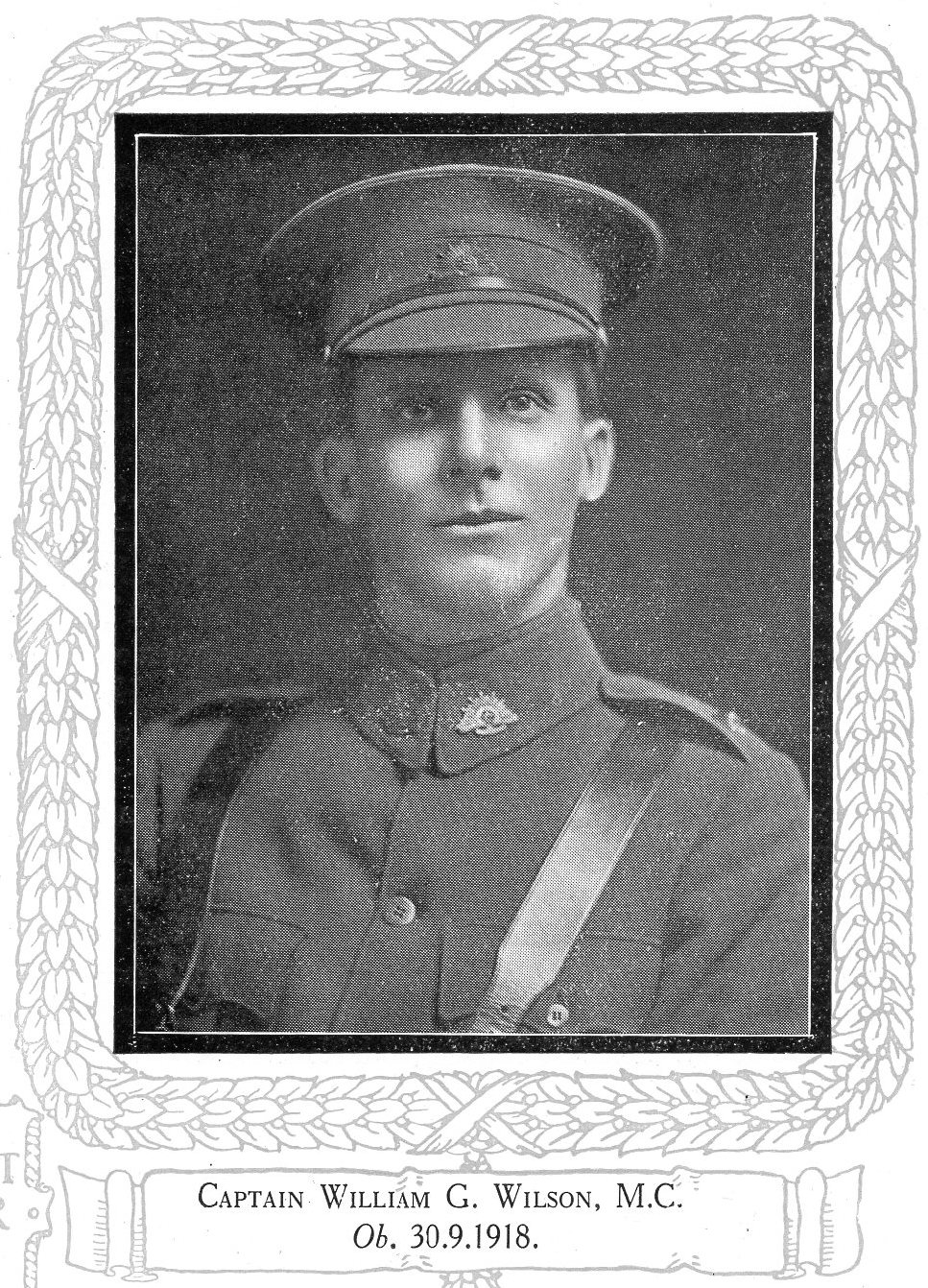
After the First World War the Education Department of Victoria published a book called The Education Department's Record of War Service 1914-1919. There were two teachers listed who had taught locally and they had both been at Koo Wee Rup North State School. By coincidence, both of them were awarded medals for bravery - Captain Frank McNamara received the Victoria Cross and Captain William Wilson received the Military Cross. There were 64 Victoria Cross medals and around 2,400 Military Cross medals awarded in the First World War. The Koo Wee Rup North State School opened in July 1894 and closed in November 1959.

What follows is the extract and the photos from The Education Department's Record of War Service 1914-1919 book on the two soldiers.*

Captain Frank H. McNamara, V.C
Captain McNamara was the son of Mr. F. McNamara of ‘Moondyne’, Royal Parade, Caulfield.  On 2nd August 1915, he was selected with seven other officers of the Permanent and Citizens Forces for the third course in Military Aeronautics at the Central Flying School at Point Cook.  Officers so trained were then due to be attached to the Indian Army for duty in Mesopotamia.  The Commonwealth, however, offered to form a complete squadron, and this offer was accepted by the Imperial Authorities.  The squadron was formed in January 1916, and it sailed on the Orsova on the 16th of March.  He disembarked at Egypt on 24th of April, and on the 28th of the same month proceeded to England for training.  He returned to Egypt on the 28th of August, and joined No.1 Squadron at Heliopolis.  On 21st of October, he joined the 67th Squadron at Kantara.  On 20th of March, 1917 he was wounded in action, and was evacuated to the hospital at Abbassia.  Later, he was promoted Captain and Flight Commander of the 71st Squadron, and served in Sinai and Palestine.  He returned to Australia as an invalid on the transport Boorara on the 27th of September.
Deed for which the Victoria Cross was awarded – ‘For most conspicuous gallantry and devotion to duty during an aerial bomb attack upon a hostile construction train, when one of our pilots was forced to land behind the enemy’s lines.  Lieutenant McNamara, observing this pilot’s predicament and the fact that hostile cavalry was approaching, descended to his rescue.  He did this under heavy rifle-fire, and in spite of the fact that he himself had been severely wounded in the thigh.  He landed about 200 yards from the damaged machine, the pilot of which climbed on to Lieutenant McNamara’s machine, and an attempt was made to rise.  Owing, however, to his disabled leg, he was unable to keep his machine straight, and it turned over.  The two officers, having extricated themselves, immediately set fire to the machine, and made their way across to the damaged machine, which they succeeded in starting.  Finally, Lieutenant McNamara, although weak from loss of blood, flew this machine back to the aerodrome, a distance of 70 miles, thus completing his comrade’s rescue.’ Prior to enlisting, he was teaching at School No. 3198, North Koo-wee-rup.

Captain McNamara was the first Australian Airman to receive the Victoria Cross. He was born in Rushworth in 1894, the son of William McNamara and Rosanna O’Meara. He attended Shepparton Agricultural High School. In 1924 he married Hélène Marcelle Bluntschli of Brussels whom he had met in Egypt during the War and they had two children. After the War he served with the newly formed RAAF and was the Officer in Command at the Flight Training School at Point Cook and later at the RAAF base at Laverton. In World War Two he was promoted to Air Vice Marshall and, in 1942, moved to England where he worked with the RAF. Captain McNamara died in England in 1961. There is a bust of Frank McNamara in Rushworth and even though he only had a short connection to Koo Wee Rup, I am claiming him as Koo Wee Rup’s VC recipient!

Captain William G. Wilson, M.C
Killed in Action on 30th September, 1918. Captain W.G Wilson, M.C., late head teacher at Koo Wee Rup North. His widow, Mrs Lilias Wilson, lives at ‘Whroo’ Tooronga Road, East Malvern. William George Wilson was born on 19th September, 1882. He became a junior teacher at Moora South in 1901 and was head teacher at Lalbert Road from 1905 to 1908, then at Harrow till 1911 and at Koo Wee Rup North till 1912. He was an excellent teacher. In 1909, he received an official letter expressing the Director’s appreciation of the good work he was doing, and the success that had attended his well-directed and zealous efforts to secure the whole-hearted co-operation of parents and pupils. He enlisted in June 1915 and proceeded to camp early in July. After serving about six months and passing successfully through the Officers’ Training School, he obtained his commission. He embarked for Egypt on the 7th of March,1916. After spending some four or five months in Egypt, he embarked for England on the 29th of July 1916, going through France. He was Instructing Officer in the 14th Training Battalion for some time, and was chosen with other Australian officers to attend a three weeks’ course at Chelsea Barracks, London.  He passed the examinations successfully. On the 4th of November he embarked for France and was serving on the Somme some months when he contracted trench fever. After two weeks in hospital, he again rejoined his Company, and was in the line till the 24th March, when he crossed to England and was in hospital for four weeks, suffering from another attack of trench fever. Until the 4th of November, 1917 he remained in England, training and embarking reinforcements for France. On that date he again returned to France and was there in the line for a few weeks until he was prompted Captain (28h November).  He remained in line as officer in command of A Company. On 28th July 1918 he led his company so successfully through an engagement that he was awarded the Military Cross. The following is an account in the London Gazette of the deed for which he was awarded the Military Cross - ‘For conspicuous gallantry and initiative. He led his company forward during an attack with great judgement and skill, under heavy fire. Though there was a gap of several yards between his flank and the unit on his left, he pushed on and reached the objective with very small casualties. His courage and splendid example of determination materially contributed to the success of the operation’.

Captain Wilson had married Lilias McLennan in 1907 and they had four children, James (b. 1908, Roy (1909), Marie (1911) and Kenneth (1913), so when William was Killed in Action in France, Lilias was left a widow with four children aged from five to 10 years old.

*I am indebted to Polly Freeman, of the Cranbourne Shire Historical Society for bringing these two men to my attention.

Tuesday, January 2, 2018

Cardinia tree plantation in honor of local soldiers

On Arbor Day, July 6, 1917 trees were planted at the Cardinia State School, in honor of the boys of this district who have responded nobly to the country's call. These weren't the only trees planted on this day in honor of  local soldiers, a grove was also planted at Tynong State School, you can read about that, here.

The event was reported in the South Bourke and Morningon Journal on July 19, 1917.


South Bourke and Mornington Journal  July 19, 1917


Here is the transcript of the article - At the invitation of the head teacher, Mr Sumpton, a most enthusiastic gathering of residents of Cardinia met at the school on Arbor Day, 6th July, for the purposes of planting trees in honor of the boys of this district who have responded nobly to the country's call. Before adjourning to the grounds, the visitors had the pleasure of listening to very interesting and instructive speeches  on the cultivation of trees by Mr Duff (Chairman),  Rev F. Betchers, Messrs Simpson Hill and Walter Moxon, also some fine essays from the school children, which indicated that have been educated in the national importance of trees. Anzac trees and shrubs were planted in honor of the following soldiers.... [See list below].....Sumptous refreshments were provided by the ladies and a very pleasant afternoon was brought to a close with the singing of the National Anthem.

Here are the soldiers, who were honoured with  a tree. I have listed their Service Numbers (SN) so you can look up their full record on the National Archives of Australia www.naa.gov.au  Some of these soldiers have  a Clyde address, as it does appear that, early on, Clyde and Cardinia were used interchangeably for the same area. 

Allars, Sydney George  (SN 816)   
Allars, William Stanley (SN 817)
Sydney and William both enlisted on January 29, 1916. Sydney was 22 and William was 19. They were both farm labourers. Sydney Returned to Australia December 21, 1918 and William Died of Wounds received, whilst fighting in France, on  May 2, 1917.  The boys were the sons of Alfred Charles and Emily (nee Osment) Allars of Clyde.

Andrews, Cecil (SN 2123)  Cecil was a 26 year old farmer when he enlisted on May 1, 1916. His address on the Embarkation Roll was Dalmore and his next of kin was his mother, Emily, of Mordialloc. Cecil was Killed in Action in France on October 16, 1917.  I have written more about Cecil on my post on Dalmore soldiers, here.

Bell, Thomas Stanley (SN 3773) Thomas was a 23 year old labourer when he enlisted on August 12, 1915. His next of kin was his mother, Mary Ann Bell, whose address was St Germains, Clyde. A notation on his file said that his father was 'not recognized'. Thomas Returned to Australia October 18, 1917 and was discharged on medical grounds in January 1918 - Gun shot wound to the thorax.

Conroy, John Patrick (SN 1123 and  2146)  John wasn't honoured with a tree but he was mentioned in the article below (between the entries for Dudley Hill and Charles Hobart, or read the article here) when his family members received an 'illuminated certificate' at a ceremony to honor Cardinia soldiers - so we will include him in this post.  John was a 32 year old Railway Repairer when he enlisted on September 28, 1914. His next of kin was his sister, Johanna Conroy, of Cranbourne. John was wounded at Gallipoli in April 1915 and was sent back to Australia, then re-enlisted and was sent back overseas and arrived in England in September 1916.  He was Killed in Action in France on September 26, 1917.


John Conroy wrote this letter to his sisters and it was published in the South Bourke and Mornington Journal, June 24 1915.

Duff, Charles Alexander (SN 859 and 237)  Charles enlisted on May 31, 1915 at the age of 19, then returned to Australia because of illness and the enlisted again May 16, 1916 when he was 20. Charles was Killed in Action in Belgium June 8, 1917.
Duff, William Vere Hobart (SN 860)  William enlisted on January 6, 1916 aged 23. His next of kin was his wife, Brenda, of East Malvern. William Returned to Australia on January 10, 1918.
Charles and William were the sons of  William Tucker Duff and Alice Laura Constance Beauchamp Hobart to give her her full name. Alice  (born 1867) was the daughter of  Charles and Rhoda (nee Withers) Hobart and thus the sister of  Charles Hobart, listed below.
The boys were also the  grandsons of the Reverend Alexander Duff and his wife, Annie Tucker.  Another son of the Reverend Duff, Walter, married Eva Sharp, who I assume is connected to Henry Sharp, listed below, possibly his aunty.  You can read more about the Duff family in the information about Henry Sharp, listed below. 

Duggan, Raymond Stacey (SN 409) Raymond enlisted on May 16, 1916, he was a 26 year old farmer and his address was Tooradin. Whist he was still overseas he married Violet Foster in England in September 1918. Raymond Returned to Australia August 8, 1919.

Hardy,  Horace Robert (SN 19995)   Horace enlisted on June 20, 1917 at the age of 21. He Returned to Australia July 13, 1919. Horace was the son of William John Hardy (c. 1855 - 1940) and  Sophia Wells Cadd (1856 - 1919) of Dalmore. His paternal grandparents, Emling and Emily (nee Gregory) Hardy took up land at Clyde North in 1856 - Hardy Road is named after the family. His maternal grandparents were Thomas and Sarah (nee Wells) Cadd who took up land at Clyde in 1862.

Henry, Alexander St Leger  (SN 5574)  Alexander enlisted on August 31, 1915 at the age of 23. He was a grazier and his next of kin was his father, John, of Pakenham. Alexander Returned to Australia May 20 1919. Alexander was the son of John and Vinie (nee Forrest also called Levina and Lavinia) Henry.  They had the property, Doneraille, at Pakenham. You can read John's obituary which includes a bit of family history, here.  John Henry was the son of Robert Henry who had the Cardinia Creek No.1 run of 5,120 acres from October 1842 until May 1851. You can read about the family here


Death notice of Alexander's grandfather, Robert Henry in The Argus April 19, 1873.


Hill, Graham John Dudley Bowman (SN 1574)   Looking at the article below, it appears that this man was known as Dudley, so that's what we will call him.  Dudley enlisted on September 6, 1915. He was  a 22 year old farmer and he Returned to Australia March 9, 1919. Dudley was granted a Soldier Settlement farm after the War, you can read his file here, on the Battle to Farm website. Dudley was the son of Cr Simpson Hill, mentioned in the article at the start of this post.
Cr Simpson Hill had two sons who went to war  and both had their address as Dalmore. The younger son, Arthur aged 18, enlisted on  June 11, 1918. Arthur's full name Arthur George Leonard Curnow Hill (SN 61869). He was sent overseas to England, but was not involved in any fighting and Returned to Australia September 22, 1919.
As a matter of interest, Cr Simpson Hill had also enlisted. His Service Number was  V21471 and he enlisted on February 16, 1916. His next of kin was naturally his wife, Charlotte. His occupation was Engine driver/Engineer. He was discharged on June 22, 1916 as he was unfit for service. He stated his age on enlistment as 44, but a notation on the file says 'is obviously very much over age' and lists his age as 56!


This article from August 1, 1918 reports on the very large gathering at
Cardinia on Thursday, July 18, the occasion being a welcome home and presentation of inscribed gold medals, gift of the residents of Cardinia, to three returned soldiers, who had  enlisted from this district, and illuminated certificates presented by the Cranbourne shire, to these and relatives of those who are still on active service. 

South Bourke and Mornington Journal August 1, 1918


Hobart, Charles Guy (SN 2424) Charles was 35 when he enlisted on June 5, 1916. His occupation was farmer but his address was East Malvern and his wife, Ann, who was his next of kin lived at Northcote. Charles is listed in the Electoral Roll at Clyde in 1909. Charles (born 1881) was the son of  Charles and Rhoda (nee Withers) Hobart and he is the uncle of Charles and William Duff, listed above.  Returned to Australia February 19, 1919.  

Lecky, James Alexander (SN 19922)  James enlisted on February 25, 1916 at the age of 25. He died of 'wounds  received in action' in France on November 14, 1918. The wound was a gun shot wound to the chest, which he sustained on October 25 1918.
Lecky, William Mervyn  (SN 6612) William enlisted on June 15, 1915 aged 20. He was killed in Action in France on September 1, 1918.
James and William were the sons of James Lecky of Cardinia Park in Officer. James (1841 to 1939) was a Cranbourne Shire Councillor from 1876 until 1905.  Their grandfather, also James (1802 to 1884) had taken up the Gin Gin Bean Run (later named Cardinia Park) at Officer in 1846 and he was a member of the Cranbourne Road Board and the Cranbourne Shire from 1860 until 1881.  Lecky Road in Officer/Pakenham  is named for the family. James and William are also listed on the Cranbourne Presbyterian Church Honor Board.

Lee, W  Not sure who this is. The book 'Look to the Rising Sun:  a history of Cardinia and District' by Eileen Williams and Jewel Beard lists a Bill Lee, who had  a sheep property and was known as Cocky Lee. The booklet 'A Clyde History' by John Campbell lists a  Lee as owning land in Muddy Gates Lanes. Then the Electoral Roll for 1914 has Harry and Gertrude May Lees at Clyde. So is W. Lee the William Lee known as Cocky Lee? Or Cocky Lee's son? Is William Lee the same Lee as the land owner from Muddy Gates Lane? Is William Lee connected to Harry Lees and the paper made a mistake with the spelling of the surname?  Many questions, but I have no answers

Moxon, Albert (SN 3342) Albert was 23 when he enlisted in July 7, 1915. Albert Returned to Australia September 27, 1917 and was discharged on medical grounds in the December due to  a fractured left ankle.
Moxon, George William (SN 2726) George enlisted on September 1, 1916 at the age of 22. George Returned to Australia July 24, 1919.
Albert and George were both farmers and had been born in Warrnambool. Their next of kin was their father, George, who in 1915, when Albert enlisted, had his address as Clyde. In 1916 when George enlisted the father's address was Chelsea.

Osborne, E.O  I am not sure who this is.  I can't find an E.O Osborne/Osborn or an E. C Osborne/Osborn or even an E.U Osborne/Osborn who enlisted. There is a Henry Houston Osborne listed in the Electoral Roll at Clyde from 1912 to 1926. His occupation was farm manager. There was a James Osborne - farmer, also listed at Clyde from 1912 to 1918. They were brothers - James died 1918 aged 59 and Henry died 1944 aged 84 - the sons of James and Esther (nee Houston) Osborne. According to James' death notice he wasn't married and had no children.  Henry married Leila Caroline Kennedy in 1895 - but can't find any record that they had children - and she was 35 when they married - so I don't believe that E.O Osborne is their child. As a matter of interest Henry served in the Boer War in the 5th Victorian Mounted Rifles, he was a Lieutenant.  I feel that E.O Osborne is somehow connected to Henry or James but I don't know how - maybe a nephew.

Patterson, Alexander Twigg.  Captain Alexander Patterson enlisted on March 27, 1916. His next of kin was his mother, Elizabeth, of Mary Street in Hawthorn. He was nearly 27 years old and was already a member of the Military Forces of the Commonwealth, having joined in August 1910. He Returned to Australia July 26, 1919. After the War he  lived at Bondoola, near Yeppoon and Rockhampton in Queensland.  Alexander Twigg Patterson was the son of Alexander David Patterson and his wife, Elizabeth Harvey Twigg, who were married in April 1886 - the wedding notice is below. Alexander David Patterson (1858 - 1920)  was the son of Alexander Patterson (1813 - 1896) and Marion McMurtrie (1816 - 1889). This Alexander Patterson is considered to be the 'father of modern Cranbourne'  and took up the St Germains Estate in 1850.


The wedding notice of Alexander's parents from The Argus May 1, 1886

Reeves, Albert Reginald (SN 629) I believe that this is Albert Reginald Reeves as he is the only A.R Reeves I can find who enlisted. Albert was farm labourer, so could have worked on a local farm, but I can't find  a specific local connection.  He enlisted on July 20, 1915 at the age of one month off 23 years of age. He was born in Essex in England and his next of kin was his father, who also lived in Essex. Albert Returned to Australia on April 19, 1919. Albert is also listed on the Cranbourne Presbyterian Church Honor Board.

Sharp, Henry James Duff (SN 5629) Although listed as G. Sharp in the newspaper article I believe Henry is the correct person. Henry was born at Clyde, attended Clyde North State School and was  the son of Henry Clark Sharp, who was a Cranbourne Shire Councillor from 1898 to 1903. Henry Senior and Junior were both living in New South Wales when Henry Junior enlisted on January 16, 1916 at  the age if 25. He was an Accountant. Henry was Killed in Action in France on February 28, 1917.  Henry's mother was Emily Eva Duff (1859 - 1938) she was the daughter of  Robert Duff and his wife Margaret, who was also a Duff. Robert and Margaret operated the Cranbourne Inn, in Cranbourne, from around 1860. In 1861 Robert died and Margaret married Edward Tucker and they ran the Hotel. Robert Duff was the brother of the Reverend Alexander Duff. You can read about the Duff and Tucker families, here.

Smith, Bruce (SN 408) 
Smith, Hugh Carruthers (SN 405)  Bruce and Hugh both enlisted on enlisted on March 6, 1916, Bruce was 27 and Hugh was 28. Bruce was a Dairy Produce Merchant and Hugh was a farmer.  Bruce Returned to Australia July 27 1917 and was discharged on medical grounds suffering from chronic pleurisy. Hugh Returned to Australia June 12, 1919. The boys were born at Devenish to Frank Smith and Mary Doolan, their father had died at the time of their enlistment, so their mother, Mary, was their next of kin and her address was Clyde.

Sumpton, Henry (SN 1827) Mr Sumpton, the Head Teacher at Cardinia State School who organised the planting of the trees had also served in the War. He was 21 when he enlisted on December 22, 1914. His next of kin was his mother who lived in Moreland. Henry was at Gallipoli and he caught Typhoid, also called Enteric fever. He Returned to Australia January 3 1916 and was discharged on medical grounds in May 1916. He then took up his appointment at the Cardinia School, however died tragically in a house fire on September 9, 1917 at the age of 23. Henry boarded with Mrs Caroline Jackson of Cardinia and the Inquest found that a kerosene lamp was 'upset', this caused the lamp to explode and the room (lined with hessian and paper) caught fire and spread to the entire house which was destroyed. It was found that Henry died of suffocation and burns received in the fire. A report in the South Bourke and Mornington Journal of September 20, 1917 had this to say about Henry -  He was highly respected by parents and scholars, and the children loved him. His amiable and generous disposition was appreciated by all with whom he came in contact and his many friends mourn their loss. 

Wall, Arthur Herbert (SN - nil) Arthur enlisted on June 3, 1916 at the age of 23 and he died of meningitis on July 14, 1916 whilst still in training camp. Arthur was born in Wunghnu near Shepparton, his next of kin was his father, Charles and his address was 'Royston', Clyde.


South Bourke and Mornington Journal July 20, 1916

Wenn, Percival James  (SN 340)  Percy enlisted on April 28, 1916 at the age of 25. He was born in Cardinia, lived in Cardinia (he was a farmer) and his next of kin was his father, John, also of Cardinia. Percy Returned to Australia April 1, 1919 and was discharged on medical grounds in June 1919 - he had suffered  a gun shot wound to the right eye. Percy's father, John, had arrived in the district in the 1860s and is the source of the name, Wenn Road. You can read his father's obituary from the South Bourke and Mornington Journal here. Percy's mother, Jane, also came from an old local family. Jane was the daughter of Anthony and Sophia (nee Cadd) Ridgway, who arrived in Cardinia in the early 1850s. 

Woods, William (SN 2728) William was 21 and  a farm labourer, when he enlisted on May 9, 1916. His address was care of William Hardy of Dalmore. His next of kin was his grandmother, Mary Woods, of Maribyrnong. He Returned to Australia January 25, 1919.  William also served in the Second World War, he enlisted at the age of  45 in January 1941 and was discharged in March 1944. William was granted a Soldier Settlement farm at Werrimull, south of Mildura, after the Great War and was living in Mildura when he enlisted in 1941. You can read his Soldier Settler file, here.